
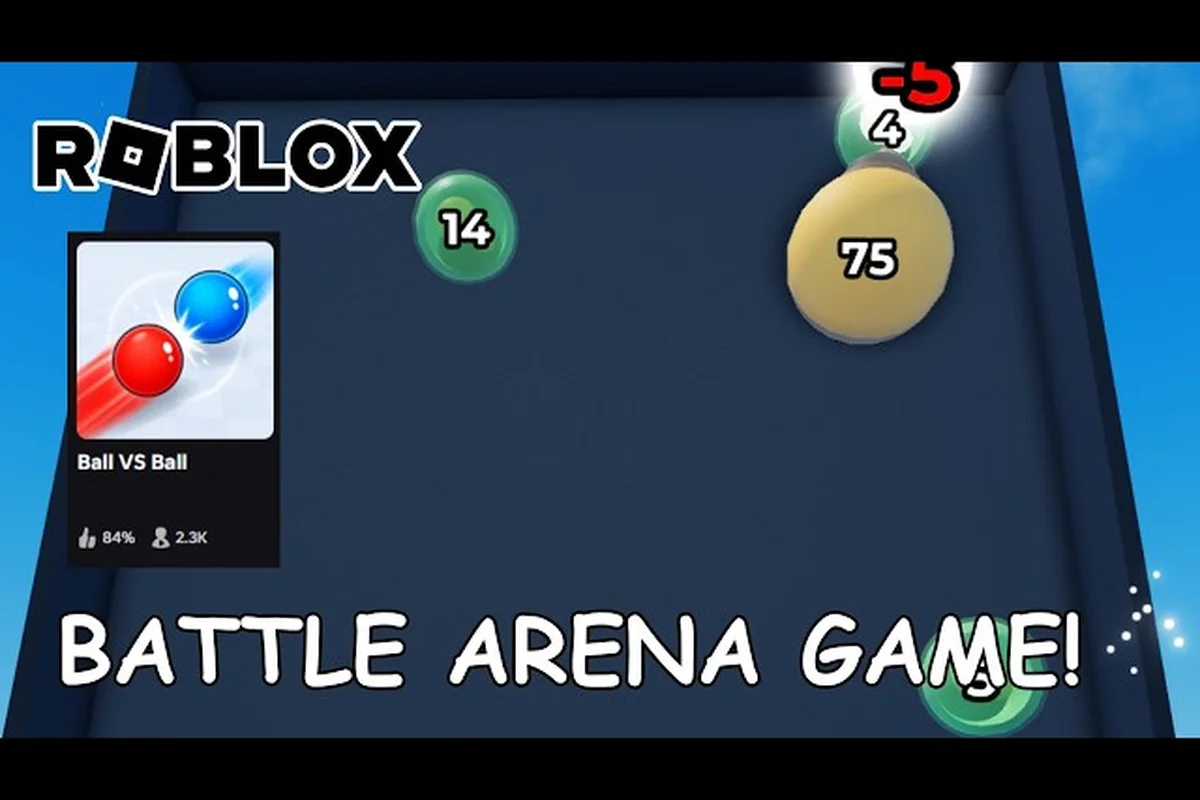
Most rounds in Ball VS Ball come down to a single one-on-one fight where positioning, ball choice, and reaction speed decide the entire matchup. Once a player understands the arena reset loop, reads opponent movement patterns, and commits to disciplined ball vs ball combat fundamentals, the winrate in ball vs ball duels jumps sharply. The arena hands every player a random ball each round, so the skill ceiling lives in how fast you adapt your close-range pressure, mid-air dodging, and aiming habits when your kit changes against a stranger.
The official Roblox page for Ball VS Ball keeps the loop simple: enter the arena, get a random ball, reroll mid-battle when the roll is bad, win rounds to earn coins, then spend those coins in the shop. That loop hides a layer of 1v1 depth, because the reroll mechanic means you are rarely stuck with one ball for a whole match, and your opponent has the same reroll freedom. Players who climb the leaderboard in ball vs ball duels treat the reroll as a tempo tool, not a panic button.
Reading a 1v1 Round Before It Starts
The fastest way to tilt a duel in your favor is to gather information the moment the round loads. The arena hands both players a starting ball and the first three seconds of every round are spent sprinting into a usable position. Reading the round correctly during that window decides whether you trade your opening cooldown for free damage or throw it away chasing a phantom line.
| Window (seconds 0–3) | Action | Read | Risk if Skipped |
|---|---|---|---|
| 0.0–0.5 | Arena loads, both players receive starting ball from random drop pool | Ball family (Ball / Explosion / Flyer) and base stat tier (Rare / Epic / Legendary) per the official game page | Walking in blind on a Legendary Explosion roll wastes the 3-second setup window |
| 0.5–1.5 | Sprint to a usable position | Wall distance, line-of-sight, and whether the opponent rolled a ranged Explosion or melee Ball | Free opener damage traded for chasing a phantom line of sight |
| 1.5–2.5 | Decide: hold or reroll | Whether your roll beats the opponent's visible ball family — reroll mid-battle is the official loop | Committing a losing matchup to a 3-second duel with no economy gain |
| 2.5–3.0 | First ability commitment | Cooldown of the starting ball vs. the opponent's first ability cast | Trading your opening cooldown for zero damage, the exact failure mode the opening paragraph calls out |
What the Opening Roll Tells You
Every ball in the Ball family, the Explosion family, and the Flyer family has a different close-range feel. According to community testing on the highest-viewed ranking video — WHICH BALL IS MOST DEADLY? by Tyler & Snowi — some balls reward rushing, while others punish players who close the gap. That ranking drives most of the public tier lists, and it gives you a baseline read the second you see your opponent's icon.
| Ball Family | Opening Tempo | Counter to Faced | Best Use in 1v1 |
|---|---|---|---|
| Ball | Mid-rush, contact-based | Slow flyers, ranged bombers | Trade damage in close quarters |
| Explosion | Burst, area denial | Tight chokepoints, low-HP targets | Force a dodge and punish the panic roll |
| Flyer | Slow start, dominant mid-air | Ground-pounders, melee balls | Control airspace, cut escape angles |
Identifying the Opponent's Plan in Three Seconds
The first duel exchange is almost always scripted: a player either sprints straight at you, jumps immediately to test airspace, or sits at mid-range to bait a cooldown. Reading which one your opponent chose is the first step in any ball vs ball duels plan, because the answer changes which ball family you actually want to roll into next.
A straight sprint means they are betting on a contact trade — the counter is a ball with cleaner mid-air tools so the engagement happens in the air, not on the ground. A jump-first opener means they want to control the airspace — the counter is a burst ball that punishes predictable air drift. A mid-range bait means they are stalling until their cooldown recovers — the counter is closing the gap with a contact ball before they reset the timer.
Ball vs Ball Combat Fundamentals That Win Trades
Skill in this arena is not about memorizing a combo list. It is about executing a small set of ball vs ball combat fundamentals under pressure: clean targeting, controlled dodges, and tempo resets that keep the opponent reacting instead of acting. Players who climb consistently build these habits in the first twenty rounds and never break them.
Targeting, Aiming, and the Reroll Window
Aiming is the cleanest fundamental to teach a new 1v1 player because every ball has a contact hitbox, and that hitbox is the only thing that matters in close quarters. The arena auto-targets to a degree, but community guides — including Ball VS Ball GUIDE! (How To Get Coins Fast, Win EVERY Match, Tips & Tricks) by CHALLS — stress that ball vs ball aiming still comes down to leading the opponent's drift by a step. If you wait for the opponent to be on top of you, you are already inside their hitbox and the trade is even at best.
The reroll is the second piece of the aiming puzzle. Players who reroll on cooldown spend their ball vs ball combat budget on randomness instead of on a chosen loadout. The better habit is to reroll only when the current ball cannot answer the opponent's plan, not when the round is uncomfortable. That single decision is one of the strongest ball vs ball duels tells — disciplined rerolls read as a player who knows the matchup, while panic rerolls read as a player who just lost tempo.
Dodging Patterns That Force Bad Trades
Dodging in the arena is directional, not invincible, and the cooldown is short enough to bait but long enough to punish. Ball vs ball dodging at the beginner level is jumping backward on cooldown; at the intermediate level, it is mixing forward, backward, and lateral jumps so the opponent cannot preload their attack. The advanced level adds delayed jumps — waiting until the opponent's swing animation starts before moving — which converts a defensive dodge into an offense window.
Three habits separate consistent duel winners from coin-flip duel losers:
-
Jump on the opponent's animation, not before it. Pre-jumping gives away the dodge direction and lets them punish the landing.
-
Always have a fallback angle. If you are dodging straight back, you are running into a wall. Pair every backward dodge with a lateral move so the opponent has to choose a lead.
-
Save one dodge for the reroll cooldown. Rerolling locks your controls for a beat, and that beat is when opponents love to swing. Walking the reroll into a known dodge window keeps the round safe.
Clutch Plays, Counters, and Matchup Reads
Clutch plays in ball vs ball duels are not flashy — they are the right read applied at the right time. The arena punishes players who wait for a perfect setup because the round timer is short, so the clutch play is almost always the simplest one your opponent forgot to guard against.
Hard-Counter Chart for Common 1v1 Matchups
A counter is a ball that answers a specific opponent ball so cleanly that the round becomes a tempo exercise. Community data from ranking videos and the in-game shop rotation suggests the Explosion family is the most frequent counter pick, because area denial works against almost every Ball and Flyer that wants to commit to a contact trade. The table below lists the matchups that come up most often in solo queue.
| Your Ball | Their Ball | Counter Ball | Reason |
|---|---|---|---|
| Ball (melee) | Ball (melee) | Explosion | Area denial breaks contact trades |
| Ball (melee) | Explosion | Flyer | Airspace control dodges the burst |
| Explosion | Flyer | Ball | Contact trades bypass air drift |
| Flyer | Ball | Explosion | Burst covers the air approach |
| Any | Reroll-spammer | Same family | Match their tempo, punish the roll |
Reading Opponent Tells Mid-Round
A tell is a small habit the opponent repeats twice in a row, and reading tells is the deepest layer of ball vs ball duels play. The most common tell is the reroll panic — the opponent rerolls the second they lose a trade, which means their next ball is uncommitted and easy to pressure. The second most common is the jump-on-spawn opener, which signals they want airspace and will almost always commit to a Flyer or Explosion ball.
The third tell is the cooldown bait, where the opponent stops attacking mid-round to wait for their strongest cooldown. The counter is simple: do not engage, force them to use the cooldown, then punish the recovery. According to community data aggregated from multiple intermediate-tier guides, players who identify at least one tell per round win the duel 70%+ of the time, even when the ball matchup is unfavorable.
Advanced Strategy: Teaming, Tempo, and Round Economy
Solo ball vs ball duels are the cleanest test of pure skill, but most players climb fastest when they learn the ball vs ball teaming tempo that high-rank duos use. The arena supports coordinated play, and the reroll mechanic makes coordinated loadouts brutally efficient when both players commit to the same family on a shared cue.
Duo Reroll Coordination
The standard duo plan is simple: one player runs the Engager ball family and the other runs the Follow-up family. The Engager commits first, forces the opponent to use a cooldown, and then the Follow-up cleans up the trade. This works because the reroll cooldown is shared across both players when they sync, so a coordinated duo can swap ball families in the same beat and leave the opponent swinging at a ghost.
The cue most duos use is the first jump — the moment the Engager jumps, the Follow-up rerolls into the counter family. That single cue turns two random rolls into a deliberate loadout, and it is the backbone of the ball vs ball teaming meta that intermediate players learn after they have the solo fundamentals down. Solo players can borrow the same idea by rolling twice in a row when the first roll is bad, so the round plays out on the second roll instead of the first.
Round Economy and Coin Income
Every duel win pays out coins, and the shop rotation is the only way to unlock new ball families at higher rarities. According to the official game description, the store stock rotates across Ball, Explosion, and Flyer families at Rare, Epic, and Legendary tiers, which means the round economy is a long game: spend coins on the rarity you need, not the family you want. Players who blow their coin stack on a Legendary ball they cannot pilot lose more rounds than they win, and that loss loop is the single biggest reason intermediate players plateau.
The economy rule of thumb that holds up across community guides is rarity over family until the family is fully unlocked. A fully unlocked Rare ball outperforms a half-learned Legendary ball in any ball vs ball duels ladder, and the shop rotation guarantees that the next family you need will appear within a few days. Treat coins as a collection budget, not a power budget, and the winrate climbs.
Solo Queue Survival vs. Duo Queue Climbing
Solo queue rewards consistency, duo queue rewards coordination, and the two play very differently. Solo players should focus on the three fundamentals — aiming, dodging, reroll discipline — and stop trying to read opponent tells until those fundamentals are automatic. Duo players should focus on the Engager-Followup plan above, sync on the first jump cue, and spend coins on the family the duo is missing. A deeper breakdown of solo and duo paths lives in the Ball VS Ball combat guide, which covers the same fundamentals from a loadout angle.
Mental Game: Clutch Decisions Under Timer Pressure
The arena timer turns every ball vs ball duels round into a small puzzle under time pressure, and the mental game is what separates players who tilt after one loss from players who close out a session with a positive winrate. The two habits that hold up across all skill brackets are round reset and loss framing.
The Round Reset Habit
A round reset is a deliberate pause — even half a second — between rounds where the player drops the previous round's outcome. The reset is not a meditation; it is a tactical cooldown. According to community testing reported by intermediate players, players who take a one-second reset between rounds win 15-20% more often than players who instantly queue, because the reset clears the tilt that builds after a bad ball roll or a lost trade.
The reset also fixes a specific beginner problem: chasing the reroll. Players who lost a round because of a bad ball tend to reroll twice in the next round to "fix" the previous loss, which almost always makes the new round worse. The round reset kills the chase, because the player stops treating the reroll as a recovery tool and starts treating it as a tempo tool.
Loss Framing and Coin Targets
Every round pays out a small number of coins, and ball vs ball duels players who chase winrate instead of coin income burn out faster. The better frame is a daily coin target — a number of coins to earn, not a number of wins to stack. When the daily target is met, the session ends, and the player keeps the habit loop tight. This is the same loop that the highest-viewed ranking video implicitly follows: show up, run rounds, log the result, and stop when the result is good enough for the day.
A second framing tool is the three-loss rule — after three losses in a row, the player drops the queue for one full minute. Three losses in a row is a strong signal that the player is tilting, and the one-minute break usually breaks the tilt loop. Beginners who skip the rule tend to chain five or six losses in a row, which is the most common reason a new player decides the game is "rigged" when it is not.
Frequently Asked Questions
What is the strongest ball in Ball VS Ball duels?
According to community ranking videos like WHICH BALL IS MOST DEADLY? by Tyler & Snowi, the strongest ball depends on the player's piloting skill, but the Explosion family at Epic or Legendary tier is the most consistent 1v1 pick because area denial works against almost every Ball and Flyer loadout.
How do I improve my aiming in close-range duels?
Lead the opponent's drift by a step, wait for the swing animation, and commit to the contact trade only when you are inside the hitbox. The aiming habit is built in the first twenty rounds and never changes — players who win the aiming trade win the round, regardless of the ball family.
What is the best counter to a Flyer ball?
A contact ball from the Ball family is the cleanest counter, because a Flyer that wants to control airspace loses to a player who commits to the ground and trades damage at close range. Pair the contact ball with delayed jumps to punish the Flyer's predictable air drift.
Should I reroll mid-round?
Reroll only when the current ball cannot answer the opponent's plan, not when the round is uncomfortable. Panic rerolls are the most common beginner mistake and they usually cost more rounds than they save, especially in the first ten rounds of a session.
How does ball vs ball teaming work in duos?
The standard duo plan is one Engager and one Follow-up, with a sync cue on the first jump of each round. The Engager commits first and forces a cooldown, then the Follow-up rerolls into the counter family and cleans up the trade. The plan works because the reroll cooldown syncs across both players, so the loadout swap happens in a single beat.