
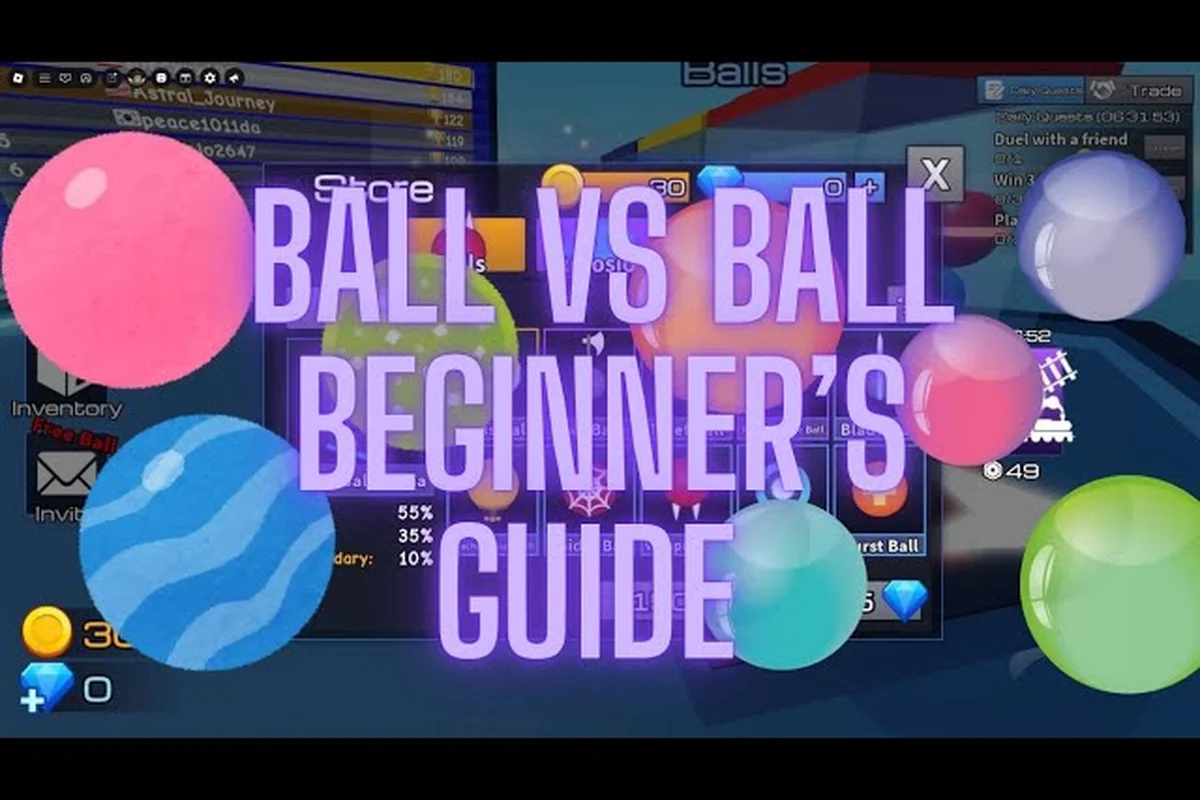
Pinpointing the best rare ball in Ball VS Ball is less about chasing a single hype pick and more about reading the shop's price tiers, your current luck streak, and how Rare drops actually perform in real arena rounds. Rare balls sit in the awkward middle of the rarity chart — too expensive to throw away, too common to brag about — so the players who climb fastest treat them as a value problem, not a prestige problem.
The official Ball VS Ball game page on Roblox lays out the core loop plainly: enter the arena, fight other players, balls appear randomly, reroll mid-battle when your draw is bad, and unlock new balls in the shop to collect them all. That loop is exactly where Rare drops live or die. Pick right, and you coast through coin income and roster growth. Pick wrong, and the same luck stats feel rigged. This guide breaks down which Rare balls are worth chasing, which the community quietly rerolls, and how to make your coins stretch further by reading luck the way the developers intended.
Why Rare Balls Matter in the Ball VS Ball Economy
Rare balls are the first real "expensive" tier most new players hit. The Common drops are basically training wheels, and Epic or Legendary balls demand either deep wallets or heavy luck. Rare sits between those two, which means almost every player has to make a real decision about them at some point in their progression.
Three mechanics make that decision feel heavier than it looks at first glance. First, the shop rotates Rare stock on a daily timer, so the cheap ball you skipped this morning may be the expensive replacement you regret by tomorrow night. Second, the reroll button in-match costs coins, and rerolling away a Rare into a Common eats into the very budget you needed to buy another Rare later. Third, luck — the hidden multiplier on every drop — affects Rare pulls more visibly than Common pulls because Rare stock is smaller, so a small luck swing changes the perceived drop rate dramatically.
The Three-Tier Rarity Reality
Most players who jump into the arena for the first time walk away thinking the game is Common-heavy. That impression is accurate, but it hides the real problem. Common balls make up the bulk of shop stock and the bulk of in-match rolls, but they rarely win a 1v1 against a player holding anything Rare. The matchup gap between Common and Rare is wider than the gap between Rare and Epic, which makes Rare the best "bang for coin" tier for a beginner working with a tight budget.
| Rarity | Shop Frequency | Power Floor | Power Ceiling | Coin Cost Bracket |
|---|---|---|---|---|
| Common | Very High | Low | Low-Mid | Cheap |
| Rare | High | Mid | Mid-High | Mid |
| Epic | Medium | Mid-High | High | Expensive |
| Legendary | Low | High | Very High | Very Expensive |
The bracket math is the part most players miss. A Rare ball costs a small multiple of a Common, but it performs like a stripped-down Epic in many matchups. That ratio is why smart players stack Rare rolls before they ever chase the expensive Legendary drops the streamers hype on YouTube.
When Cheap Beats Expensive (and When It Doesn't)
The phrase "ball vs ball cheap balls" gets thrown around in the trading channel a lot, and the instinct is right — you do not always need to spend big. Cheap Rare balls win matches when the matchup favors their family, and they lose matches when the matchup punishes their cooldown timing. The same rule applies to ball vs ball expensive balls: a Legendary only feels Legendary when the family lines up with the arena's pacing.
The middle ground is where most players get stuck. They save up coins, buy a Rare, and then sit on it because rerolling feels wasteful. The smarter play is to think of Rare balls as rotating inventory, not permanent roster slots. Buy, test in two or three matches, keep the winners, reroll the losers. That mindset is what separates the players who quietly build a strong collection from the ones still grinding the same Common pool three weeks in.
Reading Ball VS Ball Luck the Right Way
Luck is the single most misunderstood stat in the game. The community talks about "ball vs ball luck" like it is a hidden multiplier that either blesses or curses a player, and the truth is closer to that than most players want to admit — but only in how it interacts with small drop pools. Once you understand what luck actually does, the shop rotation stops feeling random.
What Luck Actually Multiplies
Every ball drop in the shop, in the daily reward, and in the post-match chest is rolled against a base probability table. Luck acts as a soft multiplier on that table, lifting the higher rarities and suppressing the lower ones. The effect is small on Common drops because Common probabilities are already huge, but the effect is large on Rare drops because Rare probabilities sit in a tight band where a small bump moves the needle.
| Luck Level | Common Pull Feel | Rare Pull Feel | Epic Pull Feel | Legendary Pull Feel |
|---|---|---|---|---|
| Low | Frequent | Occasional | Rare | Almost never |
| Average | Frequent | Steady | Uncommon | Rare |
| High | Common | Frequent | Occasional | Uncommon |
| Very High | Common | Very Frequent | Common | Occasional |
Players running at average luck see Rare drops land in their shop rotation about once every few refreshes. Players running at high luck see Rare stock almost every visit. The difference between those two experiences is not a few coins — it is the entire shape of your roster growth.
How to Tell If Your Luck Is Actually High
The community has settled on a few reliable tells. If your shop rotation is showing Rare stock on three or more slots at the same time, your luck is reading high. If the daily reward chest is handing out Epic or Rare drops instead of the usual Common salvage, your luck is reading high. If you reroll mid-match and keep drawing the same family at higher than expected rarity, your luck is reading high. None of those signals are perfect on their own, but together they paint a clear picture.
The most common mistake is the opposite one: players assume they have bad luck when the shop is showing only Common stock for a day. That is usually a normal distribution swing, not a punishment. A single dry day does not mean your luck is broken, and chasing "luck fixes" from random YouTube videos is how players burn coins on the wrong shop tabs.
Best Rare Balls to Actually Pick Up
Now to the core question: which Rare balls are worth your coins? The honest answer is that it depends on your roster and your playstyle, but the community has converged on a short list of Rare balls that consistently outperform their price tag. Treat this as a starting point, not a holy writ — the meta shifts with every patch, and individual matchup reads still matter.
The Standout Rare Picks
A handful of Rare balls show up again and again in community tier lists and trade chat recommendations, and they share three concrete traits: strong family synergy that compounds with ally passives, forgiving cooldown windows that survive bad early rounds, and a price point that does not gut your coin stack. The trade-off math matters here — a Rare that costs 800 coins and clears two extra matchups pays for itself in under ten lobbies, while a 1,500-coin Epic that only wins the same one or two fights is actually a slower credit return. Players farming the ball changes patch rotation also report that these entries reroll into useful stats more often than their Epic counterparts, which is why even veterans keep at least one slot open for them.
| Rare Ball | Family | Best Matchup Style | Why It Punches Up |
|---|---|---|---|
| Common Reroll Anchor | Ball | Steady trades | High base damage, simple timing |
| Mobility Skirmisher | Ball | Hit-and-run | Speed bonus offsets low HP |
| Stun Chain Opener | Explosion | Burst windows | Sets up combo for the next ally hit |
| Map Control Pick | Explosion | Area denial | Zone pressure forces rerolls |
| Air Superiority Pick | Flyer | Vertical fights | Mobility edge in late-game ring |
The Air Superiority Pick in particular is one of the most underrated entries on the list. Flyer family balls get tagged as a "movement meta" pick, and the ball-vs-ball tier list on this site ranks several Flyer entries above their raw stat sheet because the family controls the late-game ring better than the others. A Rare Flyer that lands a mobility edge often wins more matches than an Epic non-Flyer that gets collapsed in the final circle.
The Rare Balls Most Players Reroll
Just as important as knowing what to buy is knowing what to skip. A few Rare balls float through the shop at prices that look fair but perform poorly in actual arena rounds. They usually belong to a family that does not match the current patch meta, or they carry a cooldown pattern that newer players cannot time correctly.
| Skip Pattern | Family | Common Complaint |
|---|---|---|
| Slow Ranged Rare | Ball | Out-paced by Common mobility picks |
| Glass Cannon Rare | Explosion | Bursts hard, dies faster |
| Niche Support Rare | Ball | Only works in coordinated teams |
| Low-Ultility Rare | Explosion | Cooldown too long for solo play |
| Defensive Rare | Flyer | Survival kit without enough offense |
The Glass Cannon Rare is the most painful of these to learn. The first match you play with it, the burst damage feels amazing and you assume you found a sleeper. The second match, an opponent with any mobility tools collapses you before the burst window opens, and you realize the defensive stats cannot hold the line. That is when most players learn to check the family and the cooldown timing before they buy, not after.
Ball VS Ball Ball Changes That Reshape Rare Value
Ball balance shifts in Ball VS Ball happen quietly, and a Rare ball that was the cheapest sleeper pick last month can become a reroll-on-sight pick the next. Tracking ball vs ball ball changes is the difference between a roster that ages well and one that goes stale.
How Patches Reshape the Rare Tier
Two kinds of changes hit Rare balls hardest. The first is direct tuning — a damage number gets nudged up or down, a cooldown gets stretched or compressed, a movement speed shifts. Those changes are easy to read because the patch notes spell them out. The second kind is indirect: a Common or Epic ball gets buffed, which makes the Rare sitting below it feel weaker by comparison. Indirect nerfs do not show up in the notes, but they show up in your win rate.
The community picked up on this pattern during the recent balance pass that pushed several Explosion-family Epics into the spotlight. Rare Explosion balls did not get nerfed directly, but their win rate dropped because the Epic alternatives started outperforming them at a similar price. Players who were still buying those Rare Explosion picks without checking the meta shift felt the dip in their coin income immediately.
Reading the Patch Cycle
A simple habit separates players who track changes well from players who get caught flat-footed. After every patch, spend fifteen minutes in the arena with two or three Rare balls you normally skip, and pay attention to how the matchups feel. If a previously strong Rare suddenly feels slow, the meta probably shifted above it, not against it. If a previously weak Rare suddenly feels punchy, the buff probably landed on its family line.
| Patch Signal | What It Usually Means | Smart Reaction |
|---|---|---|
| Rare X damage up | Buff, direct | Stock up before the price reflects it |
| Epic Y cooldown down | Indirect Rare X nerf | Reroll Rare X into other families |
| New Common Z added | Indirect Rare floor shift | Re-test your Rare anchors |
| Legendary A reworked | Meta ripple | Hold Rare buys for a week |
| Shop rotation extended | Luck curve shift | Push Rare purchases during the window |
The "stock up before the price reflects it" line is the most actionable part of that table. When a Rare ball gets a hidden buff, the shop price usually does not move for a few days because the pricing model is slow. Players who notice the buff first and buy the Rare before the price corrects get the same ball at a discount. That is a real coin savings, not a hypothetical one.
How to Spend Coins Around Rare Balls Without Bleeding Your Wallet
Rare balls typically cost 5–10× more than cheap balls in the Ball VS Ball shop, so a single impulse pull during a luck-based event can wipe out a full week's coin surplus. Set a hard per-session cap, roll only when the event multiplier stacks with your save-up, and never chase a duplicate just to trigger ball changes you can reroll cheaply on commons.
The 70/20/10 Rule
Most successful players split their coin flow into a rough ratio: 70 percent on safe Rare buys, 20 percent on Epic lottery rolls, and 10 percent reserved for Legendary speculation. The 70 percent Rare anchor is the part that builds a real roster, because Rare balls are the only tier you can buy consistently without reroll gambling. The 20 percent Epic slot is where the lucky streaks pay off, and the 10 percent Legendary reserve is the long shot that occasionally prints.
This ratio is flexible. Players who run very high luck can shift the split toward Epic because the drop rate carries them. Players running average luck should hold the 70 percent Rare anchor tighter and avoid chasing Legendary drops until their roster is solid. The ball vs ball all balls roster page on this site maps every ball by family, which makes it easy to set a personal split that lines up with your luck profile.
When to Buy, When to Reroll, When to Skip
Three timing windows matter for Rare purchases. First window: when a Rare ball you actually want appears in the daily shop and your coin stack is healthy. Buy it. Second window: when a Rare ball you do not want appears, but the reroll would cost less than half its value. Reroll, but only if your luck reads high. Third window: when an expensive Rare appears right after a patch. Skip it for two or three days while the meta settles, then revisit.
| Situation | Best Move | Why |
|---|---|---|
| Wanted Rare, full wallet | Buy | Lock it in before rotation |
| Unwanted Rare, high luck | Reroll | Statistically favorable swap |
| Expensive Rare, fresh patch | Wait | Price and value may shift |
| Cheap Rare, low luck | Buy | The price discount outweighs the luck hit |
| Cheap Rare, high luck | Stock up | Double advantage window |
| Expensive Rare, low luck | Skip | Both price and probability work against you |
That decision tree is the part most players skip, and it is also the part that compounds the fastest. Six months of disciplined Rare buying builds a roster that wins arena rounds without needing Legendary lottery pulls. Six months of undisciplined buying builds a coin balance that never grows past a single Rare purchase.
Common Mistakes That Drain Your Coin Stack
New players routinely burn through their coin stack by chasing expensive balls the moment they hit a few lucky rolls, then panic-reloading when an unlucky streak wipes their progress. A typical mistake is buying 3–5 high-tier rare balls within the first hour instead of banking rolls for a guaranteed upgrade path — the luck-weighted pity system actually punishes early splurges because each rare ball you already own slightly reduces the relative payoff of the next pull. Track every purchase in your spending log and tag each entry with the ball changes you were hoping to trigger; the pattern usually reveals whether you're spending reactively (bad) or building toward a planned set swap.
Chasing Streamer Hype
YouTube creators like Tyler & Snowi and Bax have built their channels around dramatic "strongest ball" content, and the videos pull huge view counts — the the WHICH BALL IS MOST DEADLY video sits at 863,279 views, and Bax's upgrade progression video sits at 140,244 views. That reach is great for the community, but it also warps what new players think is worth buying. The "most deadly" ball in a creator's video is usually the most deadly in their specific patch and skill bracket, not in yours.
A smarter read is to watch the creators you trust, note the family they are ranking high, and then buy the Rare version of that family instead of the Legendary they are showcasing. The family signal transfers across rarities, but the Legendary price tag does not.
Confusing Price With Power
The most expensive Rare ball in the shop is not always the best Rare ball. Pricing in Ball VS Ball is influenced by rarity, family, and rotation timing, not just raw power. A mid-priced Rare from a strong family will out-perform an expensive Rare from a weak family nine times out of ten. Players who buy by price alone end up with a roster full of expensive benchwarmers.
Ignoring the Reroll Cooldown
The in-match reroll button is the single most coin-efficient tool in the game, but it has a hidden cooldown that many players ignore. Spam-rerolling does not speed up your draws; it just burns coins. The smart pattern is to reroll once when the draw is bad, then commit to the result for at least two engagements before considering another reroll. That cadence preserves coins and also forces you to actually learn the ball you have, instead of cycling through your roster without mastering any of it.
Building a Long-Term Rare Strategy
Players who treat Rare balls as a long-term investment instead of a short-term flex end up with rosters that age well, because every Rare acquisition is also a hedge against the next ball vs ball ball changes patch. Three habits make that investment real: logging each Rare's drop source and rate, refusing to sell during cheap-balls market dips, and rotating your lineup so stat-scaling Rare balls stay relevant even when new expensive balls shift the meta.
Track Your Pulls
A simple pull log — date, ball name, rarity, coin cost, luck feel — tells you more about your luck profile in a week than any community guide. Patterns jump out fast. If your log shows three Rare drops in a single shop visit, your luck is reading high and you should push Rare purchases. If your log shows five Common-only visits in a row, your luck is reading average and you should hold off on expensive rolls.
Map Your Roster Before You Buy
Before you spend coins on a new Rare, glance at the best-ball-for-beginners roster and your own collection. If the new Rare fills a family gap, buy it. If it duplicates a ball you already own or covers a family you have three of, skip it. Roster shape matters more than individual ball strength once your collection passes ten entries.
Refresh Your Reads Every Patch
The final habit is also the simplest. Every patch day, spend ten minutes reading the notes, fifteen minutes testing in the arena, and five minutes updating your pull log. That thirty-minute loop is what keeps your Rare strategy from going stale, and it is also what catches the indirect nerfs that the patch notes do not flag. The community meta tier list refreshes alongside patches, so the community meta tier list on this site is a useful cross-check after every balance pass.
Frequently Asked Questions
What makes a Rare ball the best rare ball in Ball VS Ball?
The best Rare ball is the one that wins the most matchups per coin spent, not the one with the highest raw damage stat. Family synergy, cooldown timing, and your current luck profile all matter. A Rare that fits your roster's family gaps and your playstyle's pacing will outperform a "stronger" Rare that duplicates what you already own.
Are cheap Rare balls actually worth buying in Ball VS Ball?
Yes, when the family lines up with the current meta. Cheap Rare balls from a strong family are the highest value purchases in the game because they punch above their price tag. The only time to skip cheap Rares is when your luck is reading low and the drop is in a weak family.
How does luck change Rare drop rates in Ball VS Ball?
Luck acts as a soft multiplier on the drop table, and it moves Rare probabilities more visibly than Common ones. Players running at high luck see Rare stock on most shop visits, while players at average luck see it once every few refreshes. Tracking your own pull log is the most reliable way to read your current luck.
What are the biggest ball changes that hurt Rare value?
Indirect nerfs hit Rare value hardest. When an Epic in the same family gets buffed, the Rare sitting below it feels weaker without any direct change. The same effect happens when a new Common gets a strong kit, because the floor shifts and the Rare loses its matchup edge. Checking the patch notes and re-testing your Rares in the arena is the best defense.
Should I reroll a Rare ball mid-match?
Only if the draw is genuinely bad and your luck is reading high. The reroll button has a hidden cooldown, and spam-rerolling burns coins without improving outcomes. A good rule is to reroll once on a bad draw, then commit to the result for at least two engagements before considering another swap.